June 2026

Why your gut is your immune system this winteR

Most of us think of winter as the season we have to "get through." Hibernate, layer up, drink more soup, hope for the best. But there's another way to think about it — one that sits closer to what your body is actually doing under the surface.

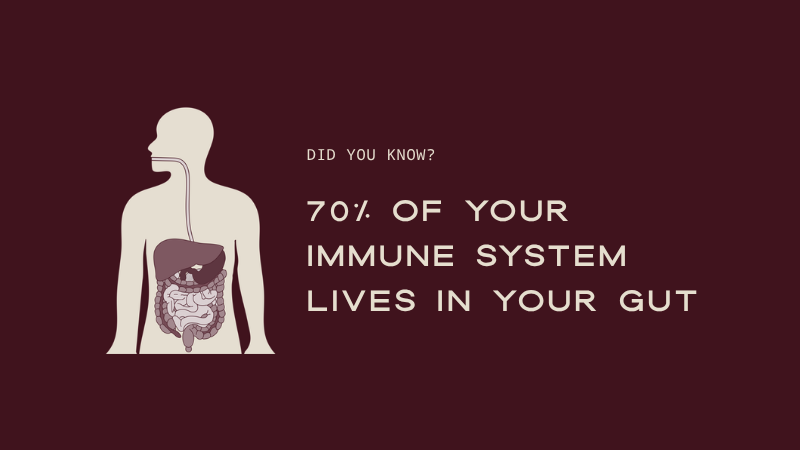
Around 70% of your immune system lives in your gut. Not in your lungs. Not in your nose. In the long, winding intelligence of your digestive tract — where trillions of microbes, immune cells and nerve endings have been working out how to keep you well your whole life.

And winter is when that system works the hardest. Less movement, less hydration, heavier food, more time indoors — all of it adds up to a gut that's carrying more, processing less, and looking for somewhere to put the slack.

This piece is about why your gut and your immune system are so closely linked, what shifts for them in winter, and what you can do to support both — gently, sustainably, and without joining a juice cleanse you'll quit by Wednesday. 
YOUR GUT IS DOING THE HEAVY LIFTING
When most people think about immunity, they think about getting “stronger” against viruses and bugs. That framing isn’t wrong — but it skips a step. The immune system’s first job isn’t to attack. It’s to recognise. To tell the difference between what’s helpful and what isn’t, and to keep that line clean.

That recognition work happens, overwhelmingly, in the gut. The gut lining is one of the largest interfaces between your insides and the outside world — every meal, every sip, every microbial visitor passes through it. And your immune cells live right behind that lining, learning, sampling, deciding.

When the gut is moving well, that conversation between food, microbes and immune cells flows smoothly. When the gut slows — when transit is sluggish, when the microbiome shifts, when waste sits for longer than it should — the conversation gets noisy. And noisy conversations make the rest of the body work harder.

When your gut is sluggish, your immune system isn't broken — it's busy. And anything that's busy with one thing has less left for everything else.

WHAT ACTUALLY SHIFTS IN YOUR GUT IN WINTER

Your gut doesn’t experience the seasons the way you do — but it absolutely feels them. Three things shift quietly and at the same time as the temperature drops.

YOU MOVE LESS

Cold mornings and dark evenings keep us inside. Less walking, less stretching, less of the everyday movement that helps the bowels stay regular. Even small dips in activity slow the transit time of food through your gut — and slower transit means more time for waste to sit, ferment and frustrate.

YOU DRINK LESS WATER

Almost everyone does this in winter. Cold water doesn’t feel as appealing, and we’re less likely to feel thirsty in cool air. Less water means harder, slower-moving stools — and a microbiome that’s less able to do its job.

YOU EAT DIFFERENTLY

Comfort foods are heavier — more dairy, more bread, more sugar, fewer raw vegetables and prebiotic fibres. Your gut bacteria are remarkably responsive to what you feed them, and a winter pantry shifts that population fast. Within a few days of eating differently, you’re effectively running a different microbiome.

gut immune system winter

Why “drain first” matters more in winter​

At KUYU we work to one principle: drain first, then heal. It’s the framework everything else sits on, and it matters most in the season your body is carrying the most. Here’s the way to think about it. Your gut and your lymphatic system are your body’s two great drainage networks. When one of them slows, the other has to work harder. Open the gut first and lymph flows more easily. Move the lymph and the gut clears more easily. They work together — and they need flow more than they need anything else. Most wellness conversations skip this part. We’re told to eat better, sleep better, supplement smarter — and all of that matters. But if the body has nowhere to put what it’s carrying, the healing protocols you stack on top have nowhere to land. They have to work twice as hard, for half the result. Drain-first changes that. Clear the path, and everything that comes next — the broths, the gut-supportive foods, the early nights, the gentle movement — has somewhere to go.​

What you can do this week

You don’t need a 30-day overhaul. Even three small, consistent shifts will move the needle.

Hydrate the way your body actually wants you to.

Warm water first thing. A pinch of salt and a slice of lemon if plain water doesn’t appeal. Two litres a day, more if you’re active. Herbal teas count.

Move daily — and gently.

Twenty minutes of brisk walking, a short yoga flow, ten minutes of stretching. Anything that warms the body and moves the lymph counts. Movement is one of the most underrated things you can do for your bowels and your immunity in the same gesture.

Soften the load on your gut.

Step away from the heaviest winter foods for a few days. Lean into warm soups, broths, slow-cooked vegetables, gentle proteins. The goal isn’t restriction. It’s giving your gut less to digest so it has more energy to clear what’s already there.

WHERE A COLONIC FITS IN

A KUYU colonic is the drain-first moment in a week like the one above. If you’ve already started softening the load on your gut and gently moving your body, a session lands beautifully — and you’ll feel the difference in the days that follow.

Winter is the season we see this matter most. Clients come in carrying a few weeks of heavier food, slower mornings, less water. A session restores flow — physically, and often emotionally too. The reset compounds over the days that follow. The protocols you stack on top suddenly start working the way they’re supposed to.

You don’t need a perfect lead-up. You don’t need to have eaten kale all week. You just need to come in. We’ll meet you where you are.